
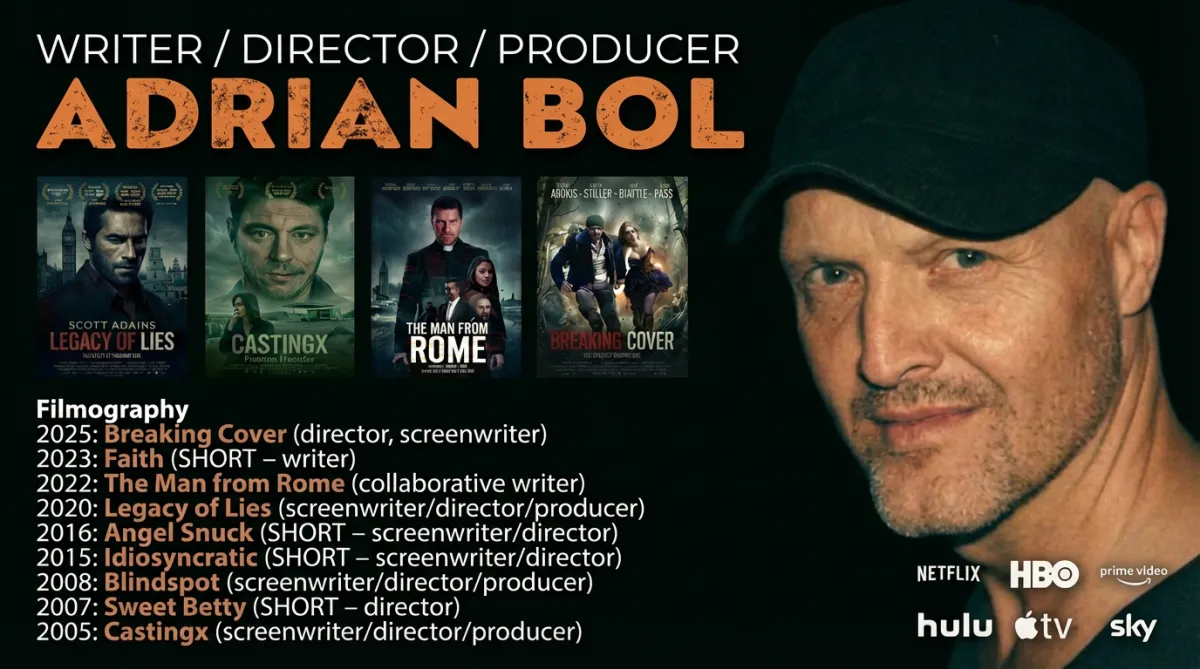
Legacy of Lies (2020) is a sleek, modern spy thriller written and directed by Adrian Bol, built on momentum, physical realism, and emotional stakes rather than spectacle for spectacle’s sake. Anchored by a commanding performance from Scott Adkins, the film delivers a tightly paced, globe-spanning espionage story that feels grounded, urgent, and unmistakably cinematic.
The film follows Martin Baxter, a former MI6 agent who vanished from the intelligence world after a mission went catastrophically wrong, costing him everything. When new information surfaces linking past covert operations to present-day political maneuvering, Baxter is forced back into the field. What begins as an attempt to protect his daughter quickly escalates into a race against time, pulling him into a web of secrets where every choice carries personal and global consequences.
What sets Legacy of Lies apart is its clarity of purpose. Bol’s direction keeps the story lean and focused, balancing espionage intrigue with visceral action and a strong emotional throughline. The film doesn’t rely on excess or gimmicks; instead, it leans into disciplined storytelling, clear geography, and grounded action that emphasizes physical credibility. Adkins’ performance is central to this approach — his presence brings weight, authenticity, and intensity to every sequence, making Baxter feel like a man shaped by experience rather than myth.
Produced on a $4.5 million budget, the film punches well above its weight, showcasing how precision, craft, and intent can rival far larger productions. Its international scope and contemporary relevance give it a modern edge, while its stripped-down approach keeps the tension personal and immediate.
That combination clearly resonated with audiences. Upon release on Netflix, Legacy of Lies quickly climbed the platform’s charts, reaching the #2 spot in the United States and #4 in the United Kingdom — a notable achievement for an independent spy thriller competing alongside major studio titles. The film’s performance cemented it as a standout example of how focused, director-driven genre filmmaking can break through in a crowded streaming landscape.
Viewers and genre fans praised the film for its momentum, its no-nonsense approach to action, and its ability to deliver a complete, satisfying thriller experience without overcomplicating the formula. It’s the kind of film that knows exactly what it is and executes with confidence — a trait increasingly rare in modern espionage cinema.
At its core, Legacy of Lies is a testament to disciplined filmmaking: a director with a clear vision, a lead actor operating at the top of his craft, and a story that respects both its audience and its genre. It stands as proof that strong concepts, executed with precision and commitment, can travel far — and leave a real mark.
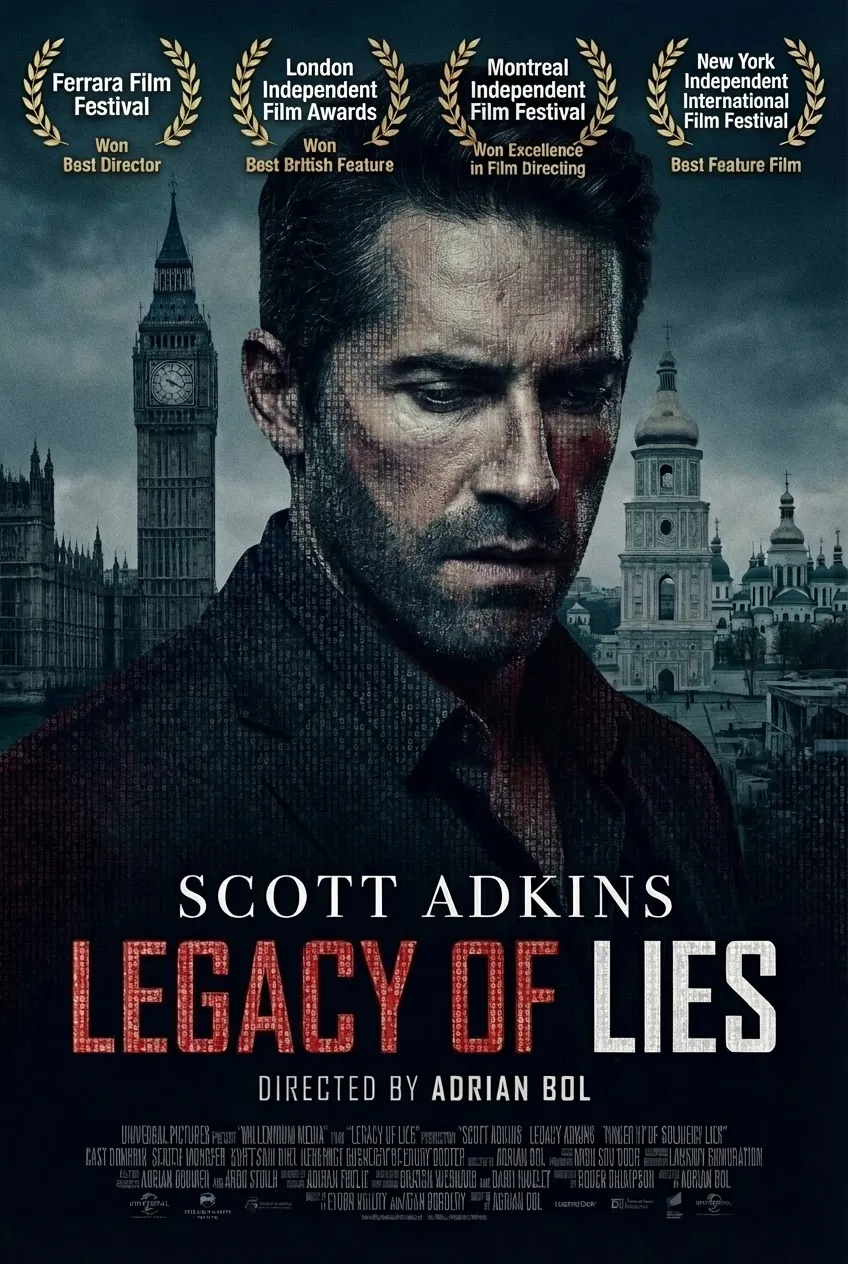
Legacy of Lies (2020), written and directed by Adrian Bol, is a modern spy thriller defined by momentum, grounded action, and emotional clarity rather than spectacle. Led by Scott Adkins in one of his strongest dramatic performances, the film delivers a tightly paced, international espionage story that stays lean and focused from start to finish.
The story follows Martin Baxter, a former MI6 agent who left the intelligence world after a disastrous mission cost him everything. When new evidence resurfaces tying past covert operations to present-day political manipulation, Baxter is reluctantly pulled back into danger. What begins as protecting his daughter becomes a high-stakes race against time, intertwining personal sacrifice with geopolitical consequences.
Bol’s direction keeps the narrative sharp: clean geography, physical realism, and action sequences that feel immediate and credible. The film avoids gimmicks, instead relying on disciplined storytelling and Adkins’ authenticity to ground every moment.
Made for $4.5 million, Legacy of Lies punches far above its budget. Its global scope and emotional drive resonated with audiences, propelling it to #2 on Netflix US and #4 in the UK. It stands as a strong example of director-driven genre filmmaking: precise, purposeful, and confident in its identity.
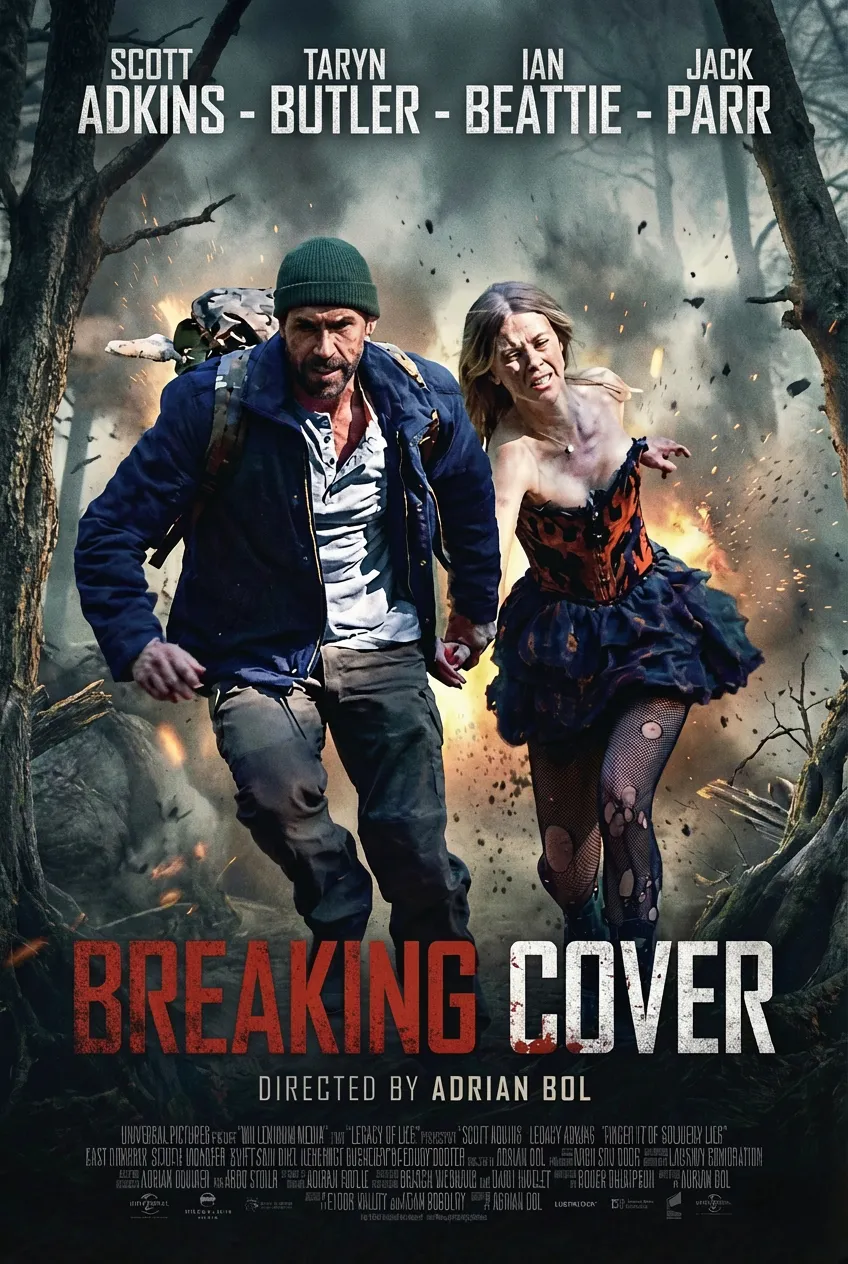
Breaking Cover (2026) is Adrian Bol’s raw, atmospheric survival thriller — a film that marries visceral action with emotional depth. Led by a haunting, restrained performance from Scott Adkins, the story becomes far more than a genre exercise; it is a meditation on fatherhood, trauma, and the hope for redemption.
Set in the unforgiving wilderness of rural Oregon, the film follows Will Fisher, a former Special Forces operative estranged from his teenage daughter, Tee. When they collide with a corrupt small-town power structure, survival becomes both physical and deeply personal.
Bol’s direction leans into elemental symbolism — water, fire, forest, darkness — creating a mythic visual language that mirrors Will’s internal journey. Every environment becomes a psychological battleground.
Adkins delivers one of his most emotionally nuanced turns to date, grounding the action in vulnerability and quiet intensity. The result is a thriller that hits hard, moves fast, and lingers long after the credits roll.
With Breaking Cover (2026), director Adrian Bol delivers a raw, atmospheric survival thriller that blends relentless action with deep emotional undercurrents.
Anchored by a powerful performance from Scott Adkins, the film goes far beyond genre mechanics, unfolding as a stark meditation on fatherhood, trauma, and the cost of violence. Set against the unforgiving wilderness of rural Oregon, Breaking Cover follows Will Fisher, a former Special Forces operative haunted by his past and estranged from his teenage daughter, Tee.
When circumstances force them into a deadly confrontation with a corrupt small-town power structure, survival becomes more than a physical challenge — it becomes an emotional reckoning. The wilderness itself functions as an active force in the story: cold rivers, dense forests, fire-lit infernos, and night-bound roads mirror the internal descent of its characters.
What sets Breaking Cover apart is its mythic visual language. Drawing heavily on elemental symbolism — water, fire, forest, and darkness — Bol crafts a film that feels both grounded and operatic. Each environment reflects a stage in Will’s internal journey, transforming action set pieces into moments of psychological and moral consequence.
Scott Adkins delivers one of his most restrained and emotionally complex performances to date. Known for his physicality, Adkins here channels quiet intensity, portraying a man whose greatest battle is not with his enemies, but with his own sense of unworthiness. His chemistry with the actor playing Tee adds a powerful emotional spine to the film, grounding the action in genuine human stakes.
The supporting cast reinforces the film’s moral tension. The antagonists are not caricatures, but fully realized embodiments of corrupted authority and survivalist brutality. Figures like Chief Greaves and LaCroix represent systems built on fear and control, making the conflict feel unsettlingly real rather than fantastical. Visually, Breaking Cover is bold and uncompromising.
The cinematography favors natural light, heavy shadows, and textured compositions that emphasize isolation and danger. The camera often lingers just long enough to let silence speak — a deliberate choice that gives the film its distinctive rhythm and maturity. Ultimately, Breaking Cover is not just a thriller about survival in the wild. It’s a story about whether redemption is still possible once you’ve crossed too many lines — and whether love, especially between parent and child, can survive the weight of past choices.
With Breaking Cover, Adrian Bol proves his ability to fuse muscular action filmmaking with thematic depth, delivering a film that is as emotionally resonant as it is viscerally gripping.
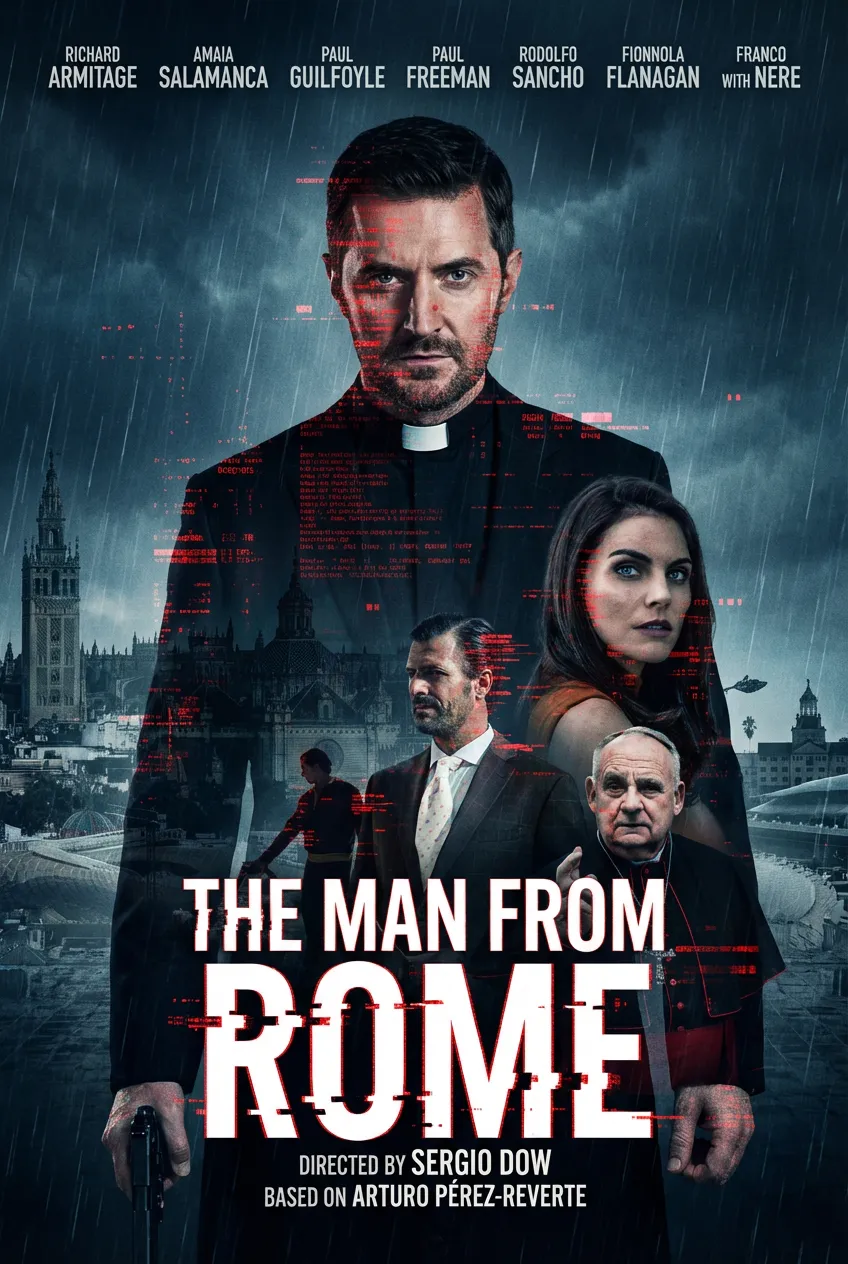
With The Man from Rome (2023), Adrian Bol demonstrates his strength not only as a director, but as a writer capable of translating complex, visceral literature into powerful cinematic storytelling. Adapted from the acclaimed novel by Arturo Pérez-Reverte, the film stands as a testament to Bol’s ability to honor a literary voice while reshaping it for the screen with clarity, tension, and emotional weight.
The story unfolds at the intersection of faith, power, and modern geopolitics. When the Vatican’s cyber-security system is breached, the investigation leads to a remote town in Spain where a mysterious priest becomes the focal point of a conflict that stretches far beyond the walls of the Church. At its core, The Man from Rome is a battle of belief systems — tradition versus progress, faith versus control — played out through sharp dialogue, moral ambiguity, and mounting suspense.
As a screenwriter, Bol’s contribution lies in his ability to make ideas physical. Pérez-Reverte’s novel is rich with internal conflict, philosophical tension, and intellectual intrigue — material that can easily remain cerebral on the page. Bol’s screenplay externalizes those ideas, giving them form through action, confrontation, and atmosphere. The result is a story that doesn’t just discuss power and belief, but makes the audience feel their consequences.
Starring Richard Armitage and directed by Sergio Dow, the film benefits from a creative collaboration rooted in respect for character and restraint. Bol’s writing gives actors room to inhabit silence as much as dialogue, trusting the audience to engage with nuance rather than exposition. The tension builds not through spectacle, but through accumulation — a hallmark of confident, mature screenwriting.
Arturo Pérez-Reverte’s work has long been known for its cinematic potential. His novels balance intellect with danger, and have previously inspired iconic adaptations such as The Ninth Gate, directed by Roman Polanski and starring Johnny Depp. The Man from Rome continues that tradition, translating Pérez-Reverte’s sharp, provocative storytelling into a modern cinematic language that feels immediate and relevant.
What stands out most is Bol’s instinct for rhythm and restraint. The screenplay understands when to push forward and when to hold back, allowing the story’s philosophical questions to resonate without slowing momentum. Every scene is designed to move the narrative — and the characters — closer to an inevitable reckoning.
The Man from Rome is not just an adaptation; it is an interpretation. It reflects Adrian Bol’s ability to step inside a powerful literary world and reshape it for the screen without diluting its intensity. The film proves that strong writing is not about adding noise, but about sharpening focus — turning ideas into conflict, and conflict into cinema.
In bringing Pérez-Reverte’s gripping novel to life, Bol affirms his place as a writer who understands both the weight of words and the demands of the screen — and who knows how to make literature breathe, move, and strike hard when translated into film.
The Man from Rome (2023) showcases Adrian Bol’s skill not only as a director but as a screenwriter capable of translating dense, visceral literature into cinematic clarity.
Adapted from Arturo Pérez-Reverte’s acclaimed novel, the film balances faith, power, and modern geopolitics with precision. When the Vatican’s cyber-security is breached, the investigation leads to a small Spanish town where a mysterious priest becomes the center of a conflict far larger than the Church itself.
Bol’s writing excels at making philosophical tension physical — turning internal conflict, moral ambiguity, and ideological struggle into action, atmosphere, and confrontation. Rather than relying on exposition, the script trusts silence, character nuance, and slow-building tension to carry the story.
Starring Richard Armitage and directed by Sergio Dow, The Man from Rome becomes more than an adaptation: it’s a sharp, modern interpretation that proves Bol’s ability to honor a literary voice while shaping it into gripping cinema.
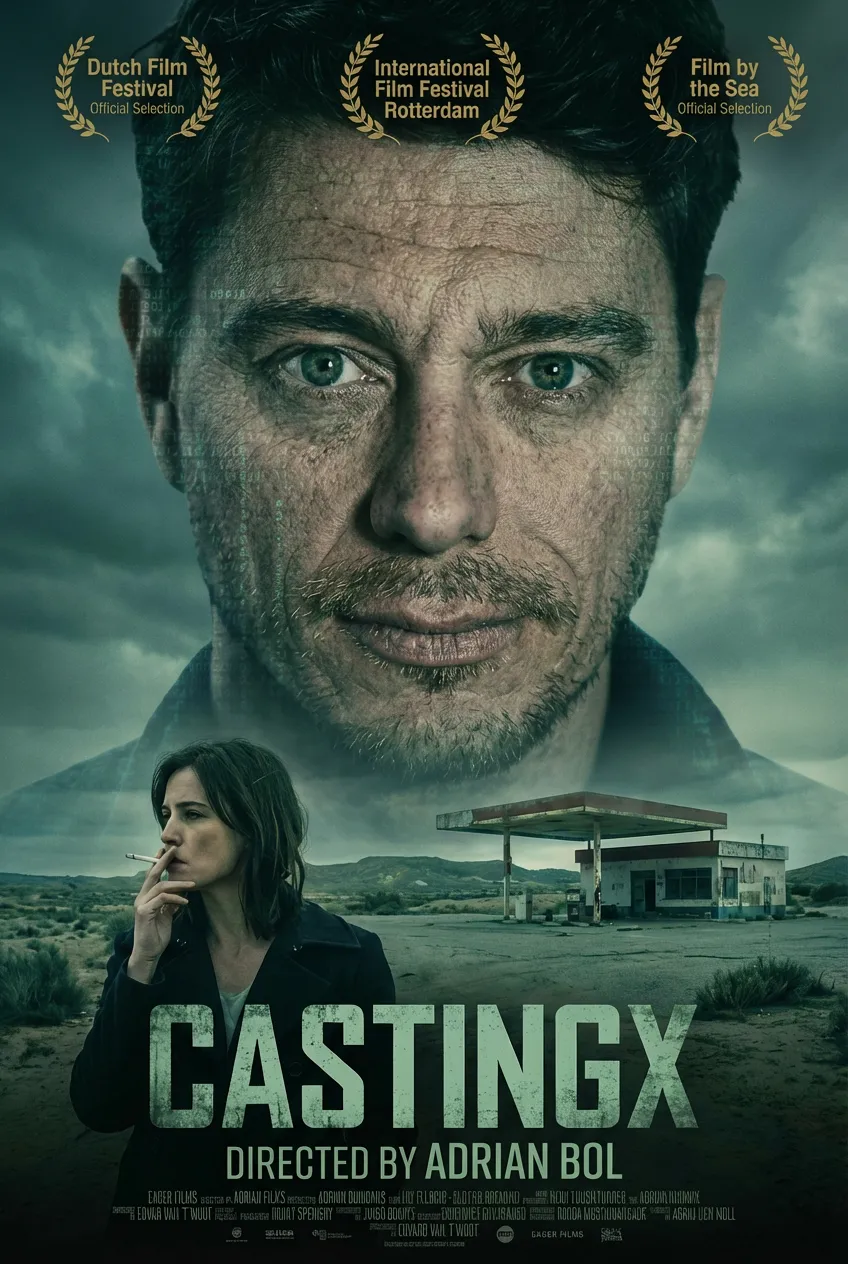
With CastingX (2005), director Adrian Bol's debute film, he delivers a provocative, tightly wound psychological thriller that pulls the curtain back on ambition, manipulation, and the unspoken power dynamics of the entertainment industry. Stripped of glamour and excess, the film operates in a confined, pressure-filled space where every look, pause, and line of dialogue carries weight.
At its core, CastingX is about control — who has it, who wants it, and what people are willing to give up to obtain it. The story unfolds during what appears to be a routine casting session, but quickly reveals itself as a psychological battleground. What begins as an opportunity turns into a test, then into something far more unsettling, as lines between performance and reality dissolve.
Bol’s direction is precise and intentional. By limiting the physical space and focusing on character interaction, he creates a claustrophobic atmosphere that intensifies with every beat. The camera doesn’t rush to explain; instead, it observes. This restraint allows tension to build organically, making the audience complicit in the unfolding power struggle. Silence becomes as important as dialogue, and the smallest shifts in behavior signal dramatic turns.
What makes CastingX particularly effective is its moral ambiguity. There are no simple heroes or villains. Each character operates within a system that rewards compliance, ambition, and emotional exposure. Bol refuses to moralize overtly, trusting the audience to sit with discomfort and draw their own conclusions. This approach elevates the film beyond shock value, transforming it into a psychological study rather than a simple thriller.
Visually, the film is clean, modern, and confrontational. The framing emphasizes proximity and gaze — faces dominate the screen, reactions linger, and the absence of visual escape mirrors the characters’ lack of control. The aesthetic is minimal but deliberate, reinforcing the idea that power doesn’t need spectacle to be effective.
As a filmmaker, Bol demonstrates a sharp understanding of psychological pacing. The script and direction work in lockstep, escalating tension without relying on external action. Every scene pushes the characters closer to a breaking point, and the payoff feels earned rather than engineered.
CastingX stands as a bold example of Adrian Bol’s ability to tell high-concept stories with minimal tools, extracting maximum impact from performance, structure, and intent. It’s a film that challenges its audience, provokes conversation, and lingers long after the final frame — not because of what it shows, but because of what it exposes.
In CastingX, Bol proves that true suspense doesn’t come from spectacle, but from the uncomfortable truths we recognize when the camera refuses to look away.
CastingX (2005), Adrian Bol’s debut feature, is a taut psychological thriller that strips ambition and manipulation down to their rawest forms. Set almost entirely inside a casting room, the film turns a familiar industry ritual into a pressure cooker where power shifts with every word, every hesitation, every glance.
What appears to be a routine audition quickly becomes a psychological contest. As performance and reality blur, the true nature of control — who holds it, who chases it, and what it costs — comes sharply into focus.
Bol’s minimalist direction heightens the tension: confined space, clean framing, and unflinching close-ups create a claustrophobic atmosphere where silence matters as much as dialogue. The film avoids easy moral judgments, instead inviting viewers into the discomfort of its characters’ vulnerabilities and desires.
Lean, confrontational, and unsettling, CastingX showcases Bol’s early mastery of psychological pacing and character-driven suspense — proving that genuine tension doesn’t require spectacle, only truth revealed under pressure.
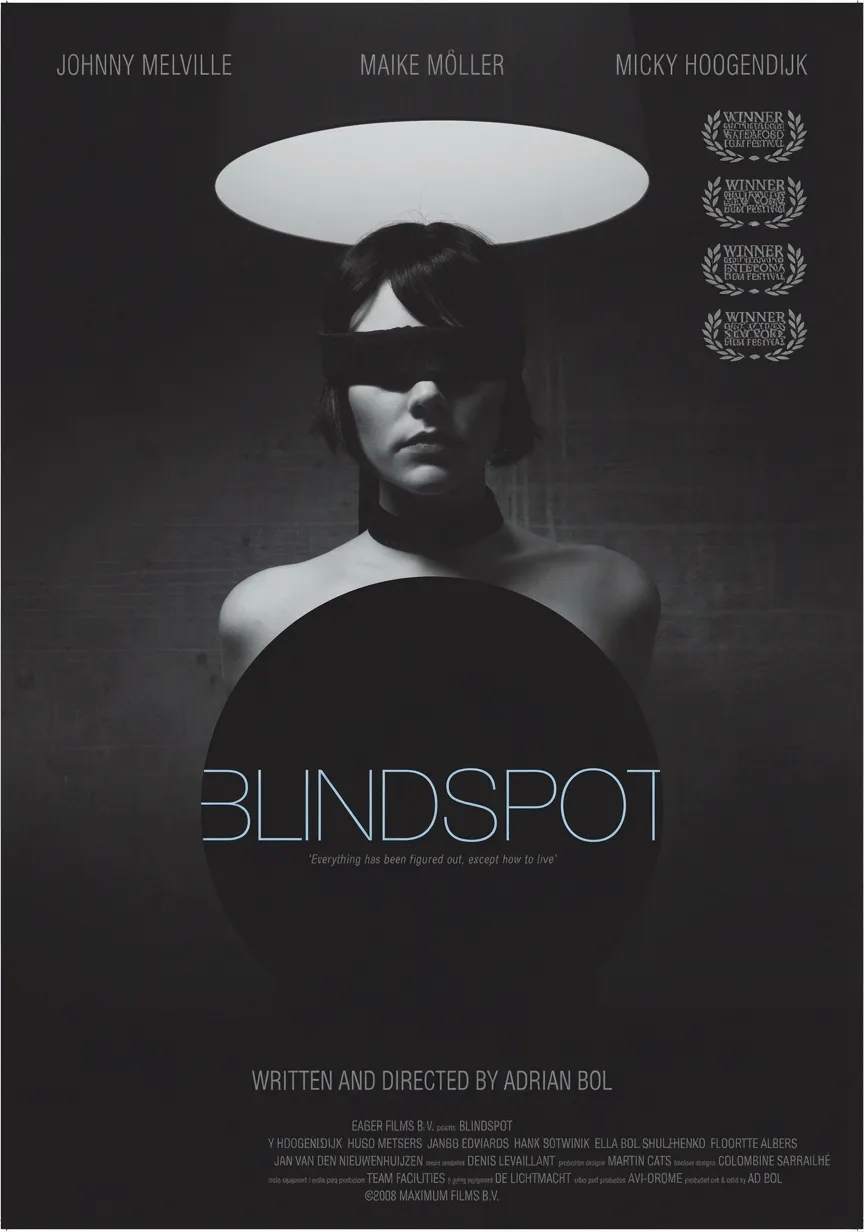
With Blindspot (2008), Adrian Bol announced himself as a filmmaker drawn to the spaces where perception, power, and truth collide. Released in 2008, the film is a tightly constructed psychological thriller that explores how easily reality can fracture when information is controlled — and how dangerous the blind spots in our own thinking can be.
At its core, Blindspot is a story about what we fail to see — not because it is hidden, but because we are conditioned to look elsewhere. The film unfolds through a carefully layered narrative in which perspective constantly shifts, forcing the audience to reassess what they believe they understand. Rather than offering easy answers, the story invites active engagement, pulling viewers into a world where certainty is always provisional.
Bol’s direction is marked by restraint and intention. Even in this early work, his interest in psychological tension over spectacle is clear. The camera is precise, often holding just long enough to let unease settle in. Silence, framing, and pacing are used as narrative tools, creating an atmosphere where the unseen carries as much weight as what is shown.
What makes Blindspot stand out is its commitment to character-driven suspense. The film’s tension emerges not from external action, but from internal conflict — from decisions made under pressure, from information withheld or misunderstood, and from the consequences that follow. Bol trusts the audience to connect the dots, rewarding attention and patience with moments of genuine insight.
Visually, the film embraces a grounded, minimalist aesthetic that serves its themes. The compositions are clean and deliberate, reinforcing the idea that truth is often obscured not by chaos, but by order. This visual discipline supports the film’s central question: how much of what we accept as reality is shaped by framing, context, and omission?
Seen in retrospect, Blindspot functions as an early blueprint for Bol’s later work. The themes of moral ambiguity, psychological pressure, and controlled storytelling that define his subsequent films are already present here. It’s a film that prioritizes thought over noise and atmosphere over excess — choices that signal a filmmaker confident in his voice from the outset.
Blindspot is not just a thriller; it’s a meditation on awareness and responsibility. By placing the audience inside the uncertainty of its characters, the film transforms suspense into something more lasting: a lingering question about what we choose to see, and what we choose to ignore.
As an early chapter in Adrian Bol’s body of work, Blindspot stands as proof that strong directorial vision is not something that suddenly appears — it’s something that reveals itself, quietly and deliberately, from the very beginning.
Blindspot (2008) marks an early turning point in Adrian Bol’s filmmaking voice — a psychological thriller built not on spectacle, but on perception, omission, and the danger of certainty.
The film probes the idea that reality isn’t just what we see; it’s what we fail to see, often because our attention has been deliberately steered elsewhere.
Bol structures the narrative as a shifting puzzle. Perspectives tilt, information rearranges itself, and the viewer is forced to question their assumptions at every turn. The tension comes from internal conflict — decisions made in confusion, truths withheld, and the quiet pressure of not knowing what matters most.
Visually restrained and tightly composed, the film uses silence, framing, and careful pacing to make the unseen feel palpable. This discipline makes Blindspot both intimate and unsettling.
Looking back, the film reads as an early blueprint of Bol’s style: psychological, morally ambiguous, and sharply focused on how power shapes truth.
Directing Legacy of Lies
"Legacy of Lies came from my fascination with how the past never truly lets go. It’s the story of a man who tried to escape a life of secrets, only to be pulled back when it matters most. Beneath the espionage and action, the film is about loss, loyalty, and redemption — and the cost of choices made in the shadows. My goal was to create a thriller that delivers tension and emotion in equal measure, where the most dangerous battles aren’t just physical, but deeply personal.”
Adrian Bol - Director
Directing Legacy of Lies
"Legacy of Lies came from my fascination with how the past never truly lets go. It’s the story of a man who tried to escape a life of secrets, only to be pulled back when it matters most. Beneath the espionage and action, the film is about loss, loyalty, and redemption — and the cost of choices made in the shadows. My goal was to create a thriller that delivers tension and emotion in equal measure, where the most dangerous battles aren’t just physical, but deeply personal.”
Adrian Bol - Director